Sustainable Crockery for Restaurants UK: What Actually Works
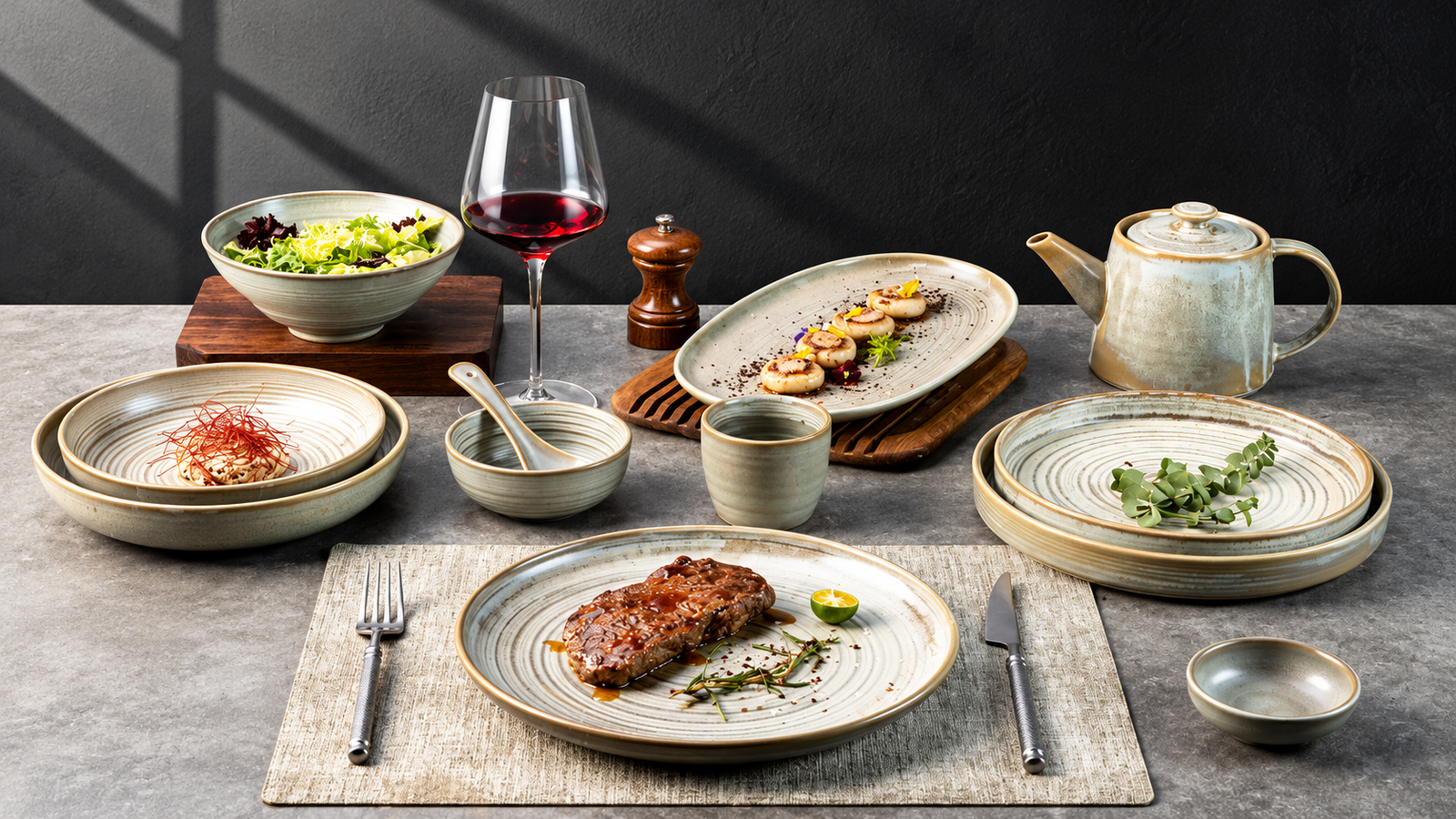
Every café and restaurant in Britain is being asked the same question now, by customers, by staff, and sometimes by local councils: what are you doing about sustainability?
Tableware seems like an easy place to start. Swap to something labelled "eco", put a line on the menu about it, job done.
Except it isn't that simple. Some products sold as eco-friendly wear out in months and end up in landfill anyway. Some contain plastics their marketing doesn't mention. And some of the greenest crockery you can buy looks completely ordinary — because the greenest thing about it is how many years it lasts.
This is an honest guide to sustainable crockery for restaurants UK, with no greenwashing, for cafés, restaurants, hotels and caterers who want to make choices they can defend.
Sustainable Crockery for Restaurants UK: The Most Important Rule
Start with the maths nobody puts on a label.
A durable, commercial-grade porcelain plate that costs £9 and serves food for five years has a far smaller footprint than a £2 "eco" plate replaced every three months — twenty of which will be made, shipped, washed and thrown away in the same period. Manufacturing, transport and washing all carry a cost. Longevity beats almost everything else.
That means the first sustainable decision is the one we talk about in our guide to reducing crockery breakage: buy vitrified, commercial-grade crockery, handle it well, and reorder the same range for years instead of replacing whole sets. A venue that keeps a dinnerware set for five to seven years is doing more for the planet than a venue that buys a new "green" set every spring.
If a supplier can't tell you how long a range will be available to reorder, that range is not a sustainable choice, whatever it's made of.
Eco-Friendly Crockery Materials: An Honest Assessment
Durable Porcelain and Stoneware — The Quiet Winners
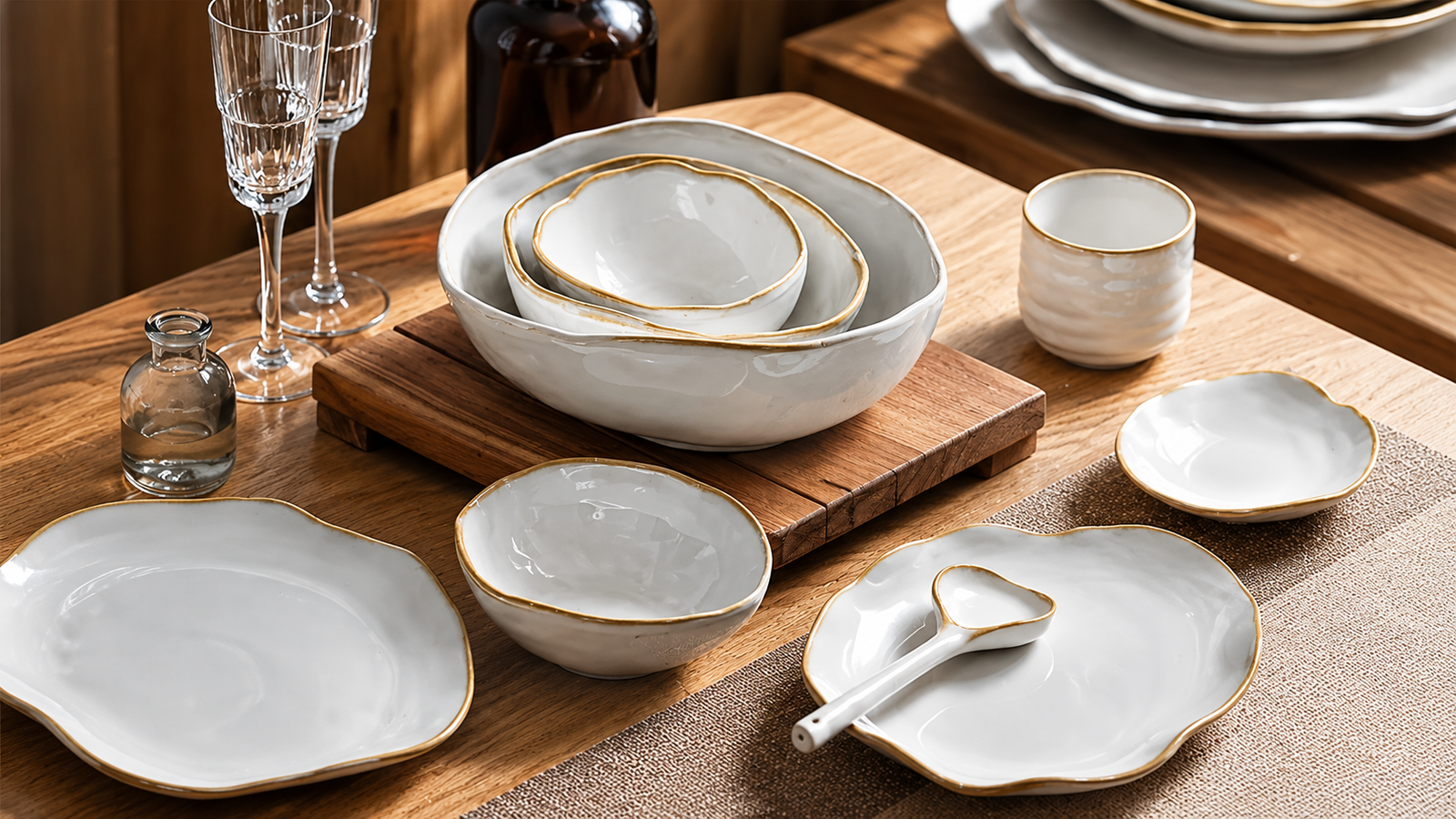
Made from natural materials (clay, feldspar, silica), fired once to last for years, fully recyclable as inert material at end of life, and free from coatings that wear off into food. The firing uses energy, and honest suppliers won't pretend otherwise — but spread over thousands of services, the per-meal impact is tiny.
Bamboo and Bamboo-Fibre Products — Read the Label Carefully
Bamboo grows fast and needs little water, which is a genuine advantage. But many "bamboo" plates and cups for hospitality are bamboo fibre bound with melamine resin. That means they are not compostable, not recyclable in normal UK streams, and shouldn't be marketed as plastic-free.
True, uncoated bamboo and palm-leaf disposables do exist and do compost — but they're single-use products, best kept for festivals, outdoor events and takeaway situations where reusables genuinely aren't practical, not as a replacement for real crockery at a table.
Melamine — Not Natural, but Not Automatically the Villain
Melamine is a plastic. It isn't biodegradable and UK hospitality should never claim it is. However, a melamine plate used outdoors for six summers, replacing hundreds of disposables or several smashed ceramics, has a defensible place — especially in pub gardens, poolside areas and children's service where breakage and safety are real issues. We cover where melamine genuinely fits in our material comparison guide.
Recycled Glassware — A Visible, Credible Win
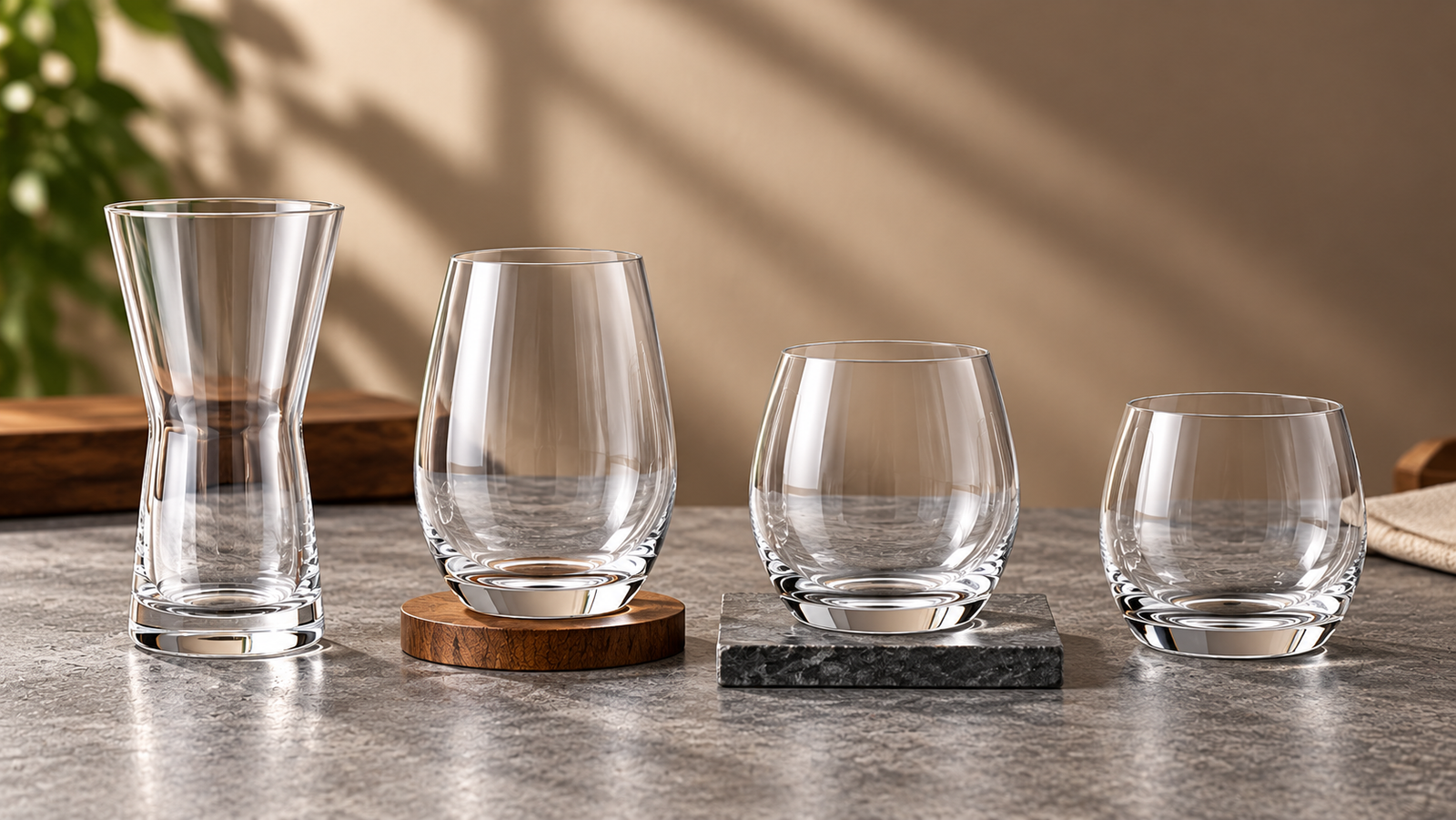
Glasses made with a high proportion of recycled glass need less energy to produce than virgin glass, look beautiful (often with a soft green or blue tint), and guests can see the choice on the table without you saying a word. Quality recycled tumblers are widely available at sensible prices now.
Wood and Slate Serving Pieces — Use for Serving, Not for Everything
Boards and slate are popular for sharing and starters, and wood from certified, responsibly managed sources is a renewable material. But boards need oiling, can harbour bacteria in deep cuts if not cared for, and wear faster than ceramic in a commercial dishwasher routine. Treat them as serving pieces you look after, not as your main dinnerware.
Sustainable Crockery for Restaurants UK: What About Disposables?
Single-use plastic plates, bowls and cutlery have been banned from supply in England since October 2023, with similar restrictions in Scotland and Wales — so for most UK hospitality businesses, plastic disposables are simply off the table legally, not just ethically.
Paper, bagasse (sugarcane) and genuinely compostable products remain available for takeaway and events. Two cautions: "compostable" usually means industrial composting, not your back garden and not general recycling — if your waste contractor doesn't send it to the right facility, it may still end up in landfill. And every disposable, however green its material, carries the full cost of being made, shipped and thrown away for a single use.
Remember: For eat-in service, reusables beat disposables in almost every honest comparison. That's not ideology. It's arithmetic.
5 Sustainable Choices That Actually Work in a Real Venue
- Buy commercial-grade porcelain or stoneware once, and keep it for years. Reorder the same range. This is the big one.
- Cut your breakage rate. Every plate that survives another year is a plate that doesn't need manufacturing or shipping. Habits, racks and stacking matter more than labels.
- Swap water tumblers to recycled glass. Visible, affordable and honest.
- Use genuinely compostable disposables only where reusables can't work — outdoor events, festivals, takeaway — and check your waste contractor actually composts them.
- Add vintage or pre-loved pieces as accents. A set of reclaimed cake stands or vintage side plates for a café is sustainable, inexpensive and full of character no new set can match.
What to Say to Customers About Sustainable Tableware
Guests are sharp. They can smell exaggeration, and UK advertising rules on environmental claims are strict for a good reason.
You can honestly say: "We use durable crockery chosen to last for years, recycled glass tumblers, and we avoid single-use plastics."
Don't say: "Our tableware is 100% eco-friendly / zero impact / plastic-free" — unless every word of it is literally true for every piece on the table.
A short, specific, true claim builds far more trust than a big vague one, and trust is what brings local customers back to an independent café or restaurant week after week.
Sustainability That Survives a Busy Saturday
The test of any sustainable choice is simple: will it still be on your tables, looking good, in three years' time? If yes, it's probably a genuinely green choice. If it'll be faded, chipped or in the bin by Christmas, it was just marketing — whoever's marketing it was.
If you'd like help building a tableware set that's durable first and sustainable because of it, talk to us. We'll suggest long-life porcelain and stoneware ranges you can reorder for years, recycled-look glassware options, and honest advice on where eco alternatives do and don't make sense for your venue.
Choose Long-Lasting Tableware with OpulentWare
Explore our collections or contact our team for practical advice on durable crockery and tableware for your hospitality business.
Browse Our Collections View FAQs Contact on WhatsAppEmail: sale@opulentware.co.uk
Good for your guests. Good for your bills. And, used year after year, genuinely better for the planet.